Where do calorie numbers actually come from? Spoiler: not from an AI's gut feeling.
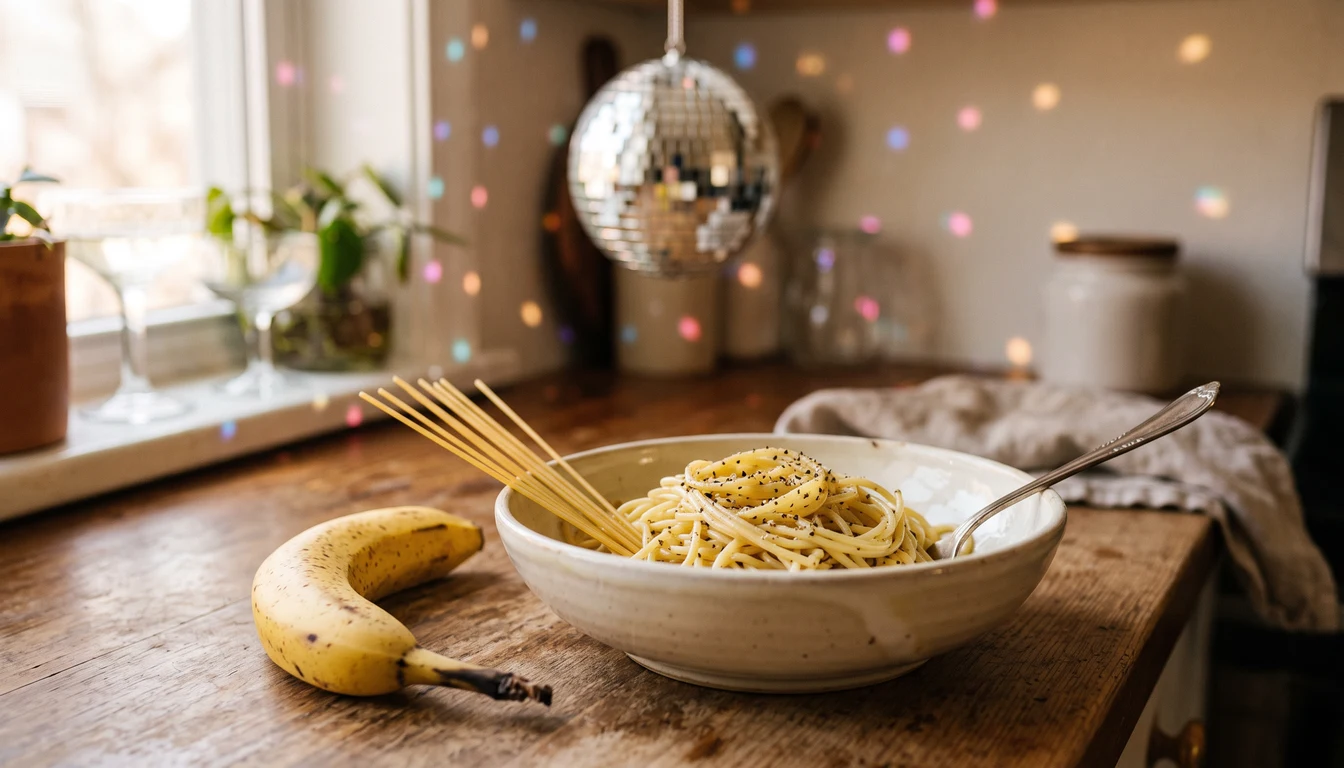
Where do calorie numbers actually come from? Spoiler: not from an AI's gut feeling.
Three apps. The same banana. Three different numbers.
Welcome to the world of nutrition data, where even the truth sometimes argues over a few calories.
And at some point you wonder: Which one is right? And where do they even get this from?
Why the same banana has different numbers
There are fairly unromantic reasons.
Some apps let users enter foods themselves. Then at some point there are four versions of "banana", one of them from someone who slipped on the decimal comma.
Others use manufacturer data. That's handy for packaged food, but not for everything without a package. A banana, for example.
And then there's the whole topic of raw, cooked, with peel, without peel, fried, breaded.
So the number often isn't wrong. It just refers to something other than what's on your plate.
The Bundeslebensmittelschlüssel. Sounds like an authority. Is one.
For nutrition per 100 grams, Foodisco uses, among others, the Bundeslebensmittelschlüssel, BLS 4.0 for short. It is an extensive German database of nutrition values for foods and dishes, published by the Max Rubner-Institut.
Not a random find from the internet. A database built for exactly this purpose.
When you scan in Foodisco, the recognized foods are matched against such databases. The AI estimates what and how much is on the plate. The calorie number comes from the database values.
That's quite a difference from an AI that just throws a number into the room and hopes nobody asks.
100 grams is not a portion
Another trap surprisingly many people step into: the number that's printed everywhere applies per 100 grams.
Per 100 grams almonds that's quite a lot of calories. Per handful, about 30 grams, much less.
Per 100 grams cucumber it's almost nothing. Per cucumber it's still not much. That's the moment a salad suddenly feels reassuring.
That's why the nutrition pages on the Foodisco Blog show both: the values per 100 grams and per typical portion.
Raw or cooked? That's not a detail. That's a factor.
This is where it gets really interesting.
Raw pasta has, according to BLS, around 346 kilocalories per 100 grams. Cooked pasta has around 146.
Same pasta. Same pot. More than twice the calories on paper.
The difference is water. While cooking, pasta absorbs water and gets heavier. If you weigh raw pasta but enter the value for cooked pasta, you calculate far too little or far too much.
The same goes for rice, oats, lentils and basically everything that swells while cooking.
The rule of thumb: weigh the way you look the number up. Weighed raw, raw value. Weighed cooked, cooked value.
Sounds trivial. But it is the reason for quite a few unexplained weeks of "but I tracked everything."
And what about restaurants and ready meals?
Honestly, there it stays an estimate.
In a restaurant nobody knows the recipe, the amount of oil or the size of the ladle. For packaged products, barcode and label help. For everything else, a sensible reference value helps.
That's why Foodisco doesn't just show you a number but also what it's made of. You see the recognized foods and the grams and can adjust both.
The final decision is yours. And your plate knows you better than any database.
What to take home from the party
Nutrition values aren't a secret science. But they are very precise at not being precise when you compare apples with pears and raw with cooked pasta.
Watch three things: Per 100 grams or per portion? Raw or cooked? With or without peel and sauce?
Then most differences between apps suddenly become quite explainable.
All values are averages and not medical advice.
If you want to look things up yourself, the Foodisco Blog has hundreds of foods with calories, nutrition and Health Score. And if you'd rather skip the looking up, let Foodisco photograph the plate and do the math. 🪩